



Essity, BASF and TU Wien achieve successful pilot project for diaper recycling
The initiative explores gasification technology to convert used hygiene products into inputs for chemical production
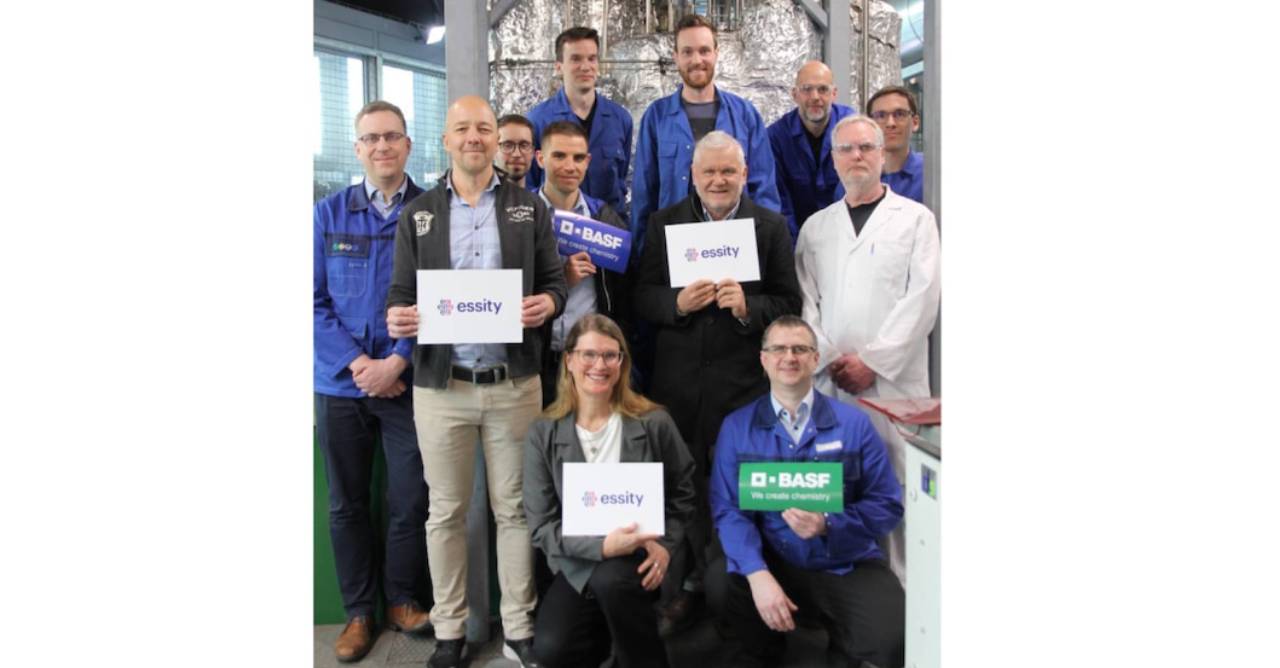
Essity, BASF and the Vienna University of Technology (TU Wien) have successfully completed a pilot project focused on recycling absorbent hygiene products, including baby diapers and incontinence products. The initiative represents a significant step forward in addressing one of the most complex waste streams within the hygiene products sector.
Used baby diapers, feminine hygiene products and adult incontinence products are particularly challenging to recycle due to their complex composition, which includes superabsorbent polymers (SAP), nonwoven materials, biological residues and other components such as pharmaceutical residues. To tackle this challenge, the pilot project applied an innovative technology based on a mixed-waste gasification reactor.
Through this process, used products are converted into a gas suitable for use in chemical production. Gasification involves exposing solid waste materials to temperatures above 800 °C without combustion, resulting in a mixture of gases including carbon monoxide and hydrogen that can be used as industrial feedstock.
Initial findings suggest that this approach could play a key role in enhancing circularity across the hygiene products value chain by offering a potentially scalable solution to one of the sector’s most persistent waste challenges.
Within this framework, Essity highlighted the importance of innovation and collaboration in the transition from a linear to a circular economy. According to the company, this transformation requires creative thinking, new business models and strong partnerships to reduce waste while delivering environmental, social and economic benefits.
In parallel, Essity continues to focus on developing smarter products that enable more sustainable consumption during use. Over the past 15 years, the company has reduced the carbon footprint of its TENA products by 38% and that of its baby diapers by more than 31%.