



Domtar’s water conservation projects save more than 2.3 billion gallons annually
Mill-led initiatives have completed 24 projects across 10 facilities since 2023, helping the company cut water-use intensity toward its 2030 sustainability target
Employee-led conservation projects at 10 Domtar mills have reduced the company’s water consumption by more than 2.3 billion gallons annually since 2023, supporting its goal of reducing water-use intensity by 20% by 2030 compared with 2020 levels.
The results come from Domtar’s Water Reduction Capex Fund, a programme that dedicates a portion of the company’s capital spending exclusively to water-conservation projects proposed by mill teams.
Since the programme was launched, 24 projects have been completed across 10 Domtar mills. According to the company, the initiatives collectively save enough water each year to fill approximately 3,480 Olympic-sized swimming pools.
A FUND DEDICATED EXCLUSIVELY TO WATER REDUCTION
The Water Reduction Capex Fund operates as an internal competition, with mill teams submitting project proposals to compete for available funding. A key feature of the programme is that projects do not have to generate a financial return.
“The projects didn’t need to provide a financial return. The priority was saving water,” said Brian Kozlowski, senior director of environment and sustainability for Domtar’s Paper and Packaging business unit. “That gave our employees the chance to think beyond the bottom line — and they really did.”
The approach has enabled operators, engineers and maintenance teams to identify opportunities to reduce water consumption directly within mill processes. Many of the projects focus on reusing water that would otherwise be replaced with fresh water.
In papermaking, for example, water drained from the forming sheet contains suspended fibres and is commonly known as white water. Capturing and reusing this water reduces the amount of fresh water required in production.
Other initiatives focus on cooling water. Rather than using water once and discharging it, mill teams have redirected it to cooling towers, where heat is removed and the water can be recirculated.
ADDITIONAL INITIATIVES TARGET WATER DEMAND AT THE SOURCE
Other projects have focused on reducing water demand in equipment and production systems.
Industrial pumps, for instance, often require a continuous flow of seal water to keep moving components cool and properly sealed. While individual flows may be relatively small, continuous operation across hundreds of pumps can result in significant overall consumption.
Replacing traditional pump packing with modern mechanical seals can substantially reduce this requirement, while flow regulators can limit water use to the amount actually needed by each piece of equipment.
Similarly, converting open-loop cooling systems into closed-loop systems allows water to be recirculated repeatedly, potentially eliminating the need for continuous fresh-water intake for these applications.
During the first year of the programme, Domtar approved 10 projects at seven mills, generating annual savings of more than 1 billion gallons of water. The initiative has since grown to 24 completed projects across 10 mills.
Competition among the facilities has also encouraged further innovation. In spring 2026, Domtar’s Nekoosa Mill in Wisconsin received the company’s internal Water Reduction Award for a series of conservation initiatives expected to save more than 129 million gallons of water annually.
The programme’s impact is also reflected in Domtar’s sustainability indicators. According to the company’s Q2 2026 Sustainability Strategy update, the Water Reduction Capex Fund has completed its third year of projects. Through the first quarter of 2026, water use across Domtar’s Paper & Packaging business unit was 10% lower than in 2020, representing half of the company’s 2030 reduction target.

WATER RESILIENCE IN PULP AND PAPER PRODUCTION
Water is an essential resource in pulp and paper manufacturing and is used throughout several stages of production, including pulp washing and transport, steam generation and equipment cooling.
Domtar states that its mills seek to reuse water internally as much as possible. Approximately 94% of the water withdrawn by a mill is treated and returned to the environment, while the remainder leaves the process mainly through evaporation or as part of the finished product.
The company also connects water conservation with broader issues of operational resilience and climate risk.
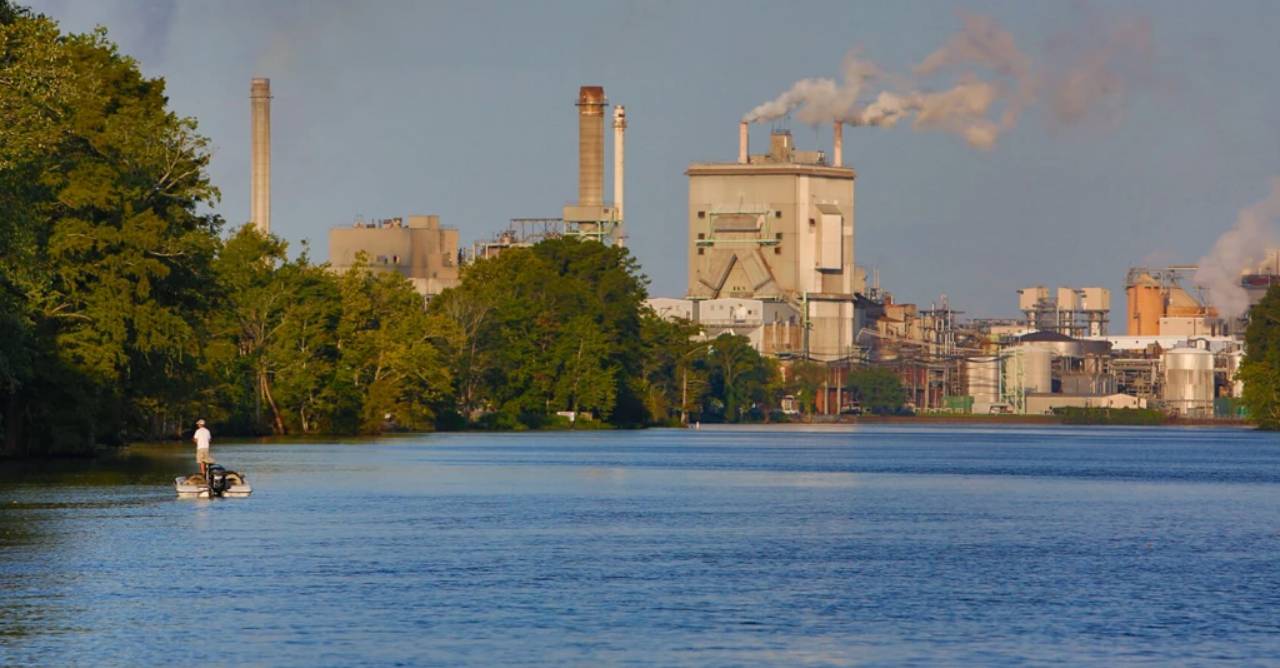
Domtar’s Plymouth Mill in eastern North Carolina illustrates the importance of water availability to mill operations. The facility draws fresh water from the Roanoke River near the coast, where river flows help prevent salt water from the Albemarle Sound from moving upstream.
During drought conditions in 2022 and 2023, however, river levels fell enough for the saltwater front, known as the saltwater wedge, to move to within approximately a quarter of a mile of the mill’s water intake. Because salt water cannot be used in pulp and paper production, maintaining access to freshwater is critical to the facility’s operations.
Reducing water withdrawals can help leave more freshwater in the river, strengthening the natural barrier against saltwater intrusion while supporting other users who depend on the same water source.
Domtar considers water resilience one of the four environmental commitments outlined in its 2030 Sustainability Strategy, alongside responsible sourcing, protection of critical habitats and greenhouse gas emissions reductions.
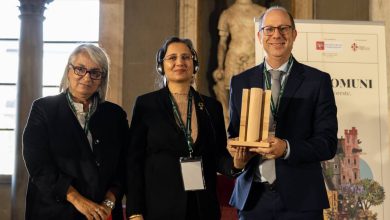
Launched in 2023, the Water Reduction Capex Fund received the American Forest & Paper Association’s Leadership in Sustainability – Water Management Award in 2024. The programme is designed to continue supporting mill-led projects that reduce water demand while strengthening the long-term resilience of Domtar’s pulp, paper and packaging operations.