



Irving Woodlands plants its 100 millionth tree in Maine, marking a major reforestation milestone
The achievement highlights decades of sustainable forest management and long-term investment in the future of forests in the United States
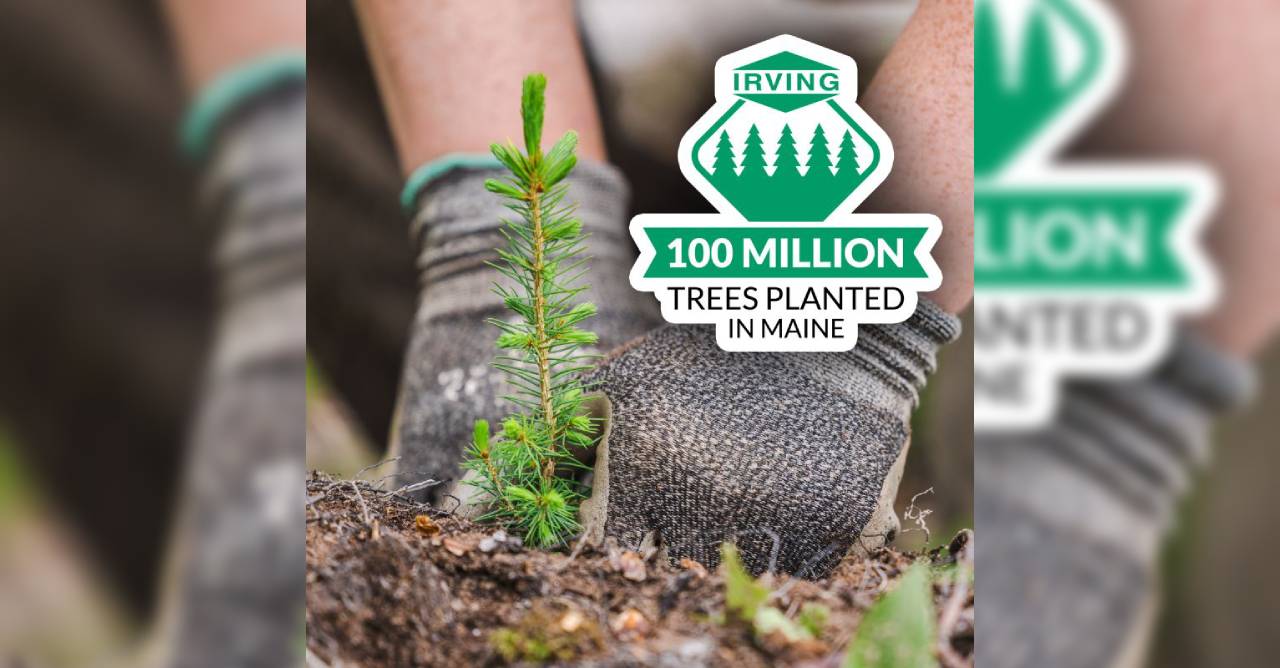
Irving Woodlands has reached a significant milestone in its reforestation efforts by planting its 100 millionth tree in the state of Maine, United States. The achievement reflects the company’s long-term commitment to sustainable forest management and is part of a broader legacy that has seen more than one billion trees planted across its managed lands since 1957.
Maine has played a central role in that effort, with the company continuing to invest in forest renewal to support long-term productivity and the sustainability of forest resources in the United States.
“This milestone reflects decades of long-term forest stewardship and a commitment to growing more wood than is harvested,” said Ked Coffin, Regional Forester. “In 2026 alone, Irving Woodlands has planted 7.8 million trees in Maine, contributing to a continuous cycle of harvest, renewal and forest protection across our lands.”
The company also recognized the contribution of its tree-planting crews, whose work has been fundamental to the success of its large-scale reforestation program and the long-term renewal of Maine’s forests.
Each seedling planted is part of Irving Woodlands’ 80-year forest management plan, supported by more than 40 years of tree research. According to the company, the initiative helps maintain healthy, productive and resilient forests while supporting jobs and economic development across communities in Maine, U.S.
Irving Woodlands also noted that 100% of harvested areas are reforested through a combination of tree planting and natural regeneration, reinforcing its commitment to responsible forestry and the long-term sustainability of its operations.
With the planting of its 100 millionth tree in Maine, United States, the company celebrates not only a symbolic milestone but also its continued commitment to the future of the region’s forests and the communities that depend on them.