





Fibre-to-fibre programme reports increased hardwood use and energy savings at Tissue Summit North America 2026
A project involving 15 selected industry players raised average hardwood consumption from 83% to 95% in nearly one year, while one participant achieved energy savings of up to 35%
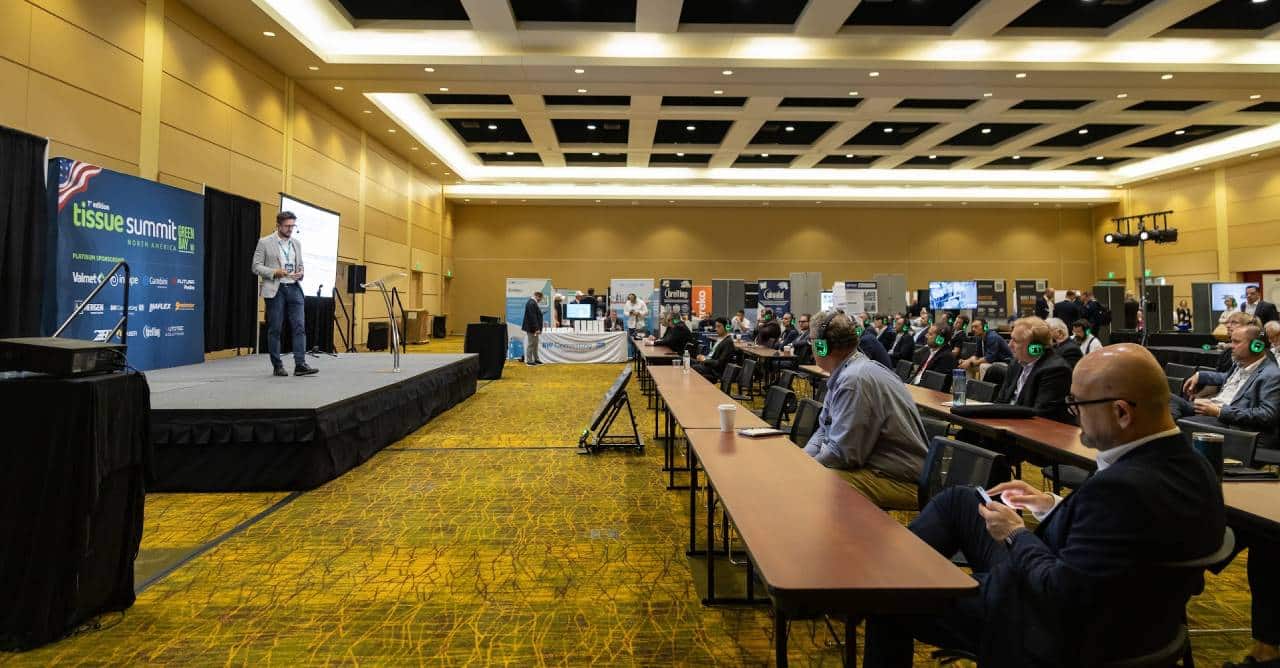
A fibre-to-fibre programme involving 15 selected industry players was presented at Tissue Summit North America 2026, highlighting results achieved over nearly a year of collaboration. At the beginning of the project, the participating group had an average hardwood consumption rate of 83%. By the end of the following year, this figure had increased to 95%.
One of the cases highlighted during the presentation involved a Through-Air-Dried (TAD) paper machine. Rather than focusing on mills that had completely eliminated softwood from their furnish, the presenter emphasized a project in which softwood consumption was reduced from 25% to between 6% and 7.5%.
Other participants also reported reductions, including one case in which softwood usage fell from 30% to 20%, and another in which it decreased from 25% to 15%.
The TAD machine case was particularly noteworthy because such a reduction had been considered unfeasible just one or two years earlier.
The programme also delivered significant operational benefits. One participating customer reported energy savings of up to 35%. In this case, the reduction in energy costs exceeded the savings achieved in fibre costs, which at the time were approximately US$100.
Further details about individual participants and their results were not disclosed, as the information remains confidential.

FIVE-STEP APPROACH
The programme’s methodology was presented as a five-step process designed to support the transition towards greater hardwood fibre use while considering the specific requirements of each customer.
The first step involves the supplier sharing its knowledge of eucalyptus fibre, including how different blends behave and interact with other fibre types.
The second and third steps consist of joint work with the customer to gather information and technical data, understand the machine and manufacturing process, and identify the properties that have the greatest impact on the final product.
Based on this assessment, the supplier and customer develop an action plan. Machine trials only begin after this stage has been completed.
OPERATIONAL PERFORMANCE AND LABORATORY TESTING
Two key conditions were emphasized as essential to the programme. First, runnability, productivity and product quality must remain at least at the same levels achieved with the customer’s existing process.
Second, machine trials must be preceded by laboratory simulations using the customer’s own fibre blends and production recipes. This preliminary work allows the teams to assess the proposed changes before implementation on the production line, making subsequent trials more targeted and reducing the number of machine hours required.
The approach is intended to support fibre substitution while maintaining operational performance and minimizing the time needed for industrial validation.